Who gave the permission?
Italy fines Meta over phone galleries, California sues OpenAI over its agents, the US puts a licence on remote AI chips, Gemini 4 Hydrogen reaches Search, a router grounds US flights and ChatGPT gets a wallet.
Notes
Each reel gets a longer note here, with the files, the numbers and what to check. Fictional examples are always labelled.
A selection from the daily Radar, with sources and why each story matters.
Italy fines Meta over phone galleries, California sues OpenAI over its agents, the US puts a licence on remote AI chips, Gemini 4 Hydrogen reaches Search, a router grounds US flights and ChatGPT gets a wallet.
OpenAI and Anthropic put prices on their growth, NVIDIA's board opens an inquiry, Claude links bank accounts and Uber counts rides booked by agents.
Binance's account of a fake recruiter, supermarket cooling failures, Google's school search controls and document editing in Gemini.
Anthropic's IPO filing, OpenAI's cheaper Terra model, Apollo's analysis of company performance and the approval controls in Claude Duet.
Wispr Flow turns what you say into clean text in any app where you can type. We use it for three things: our own notes, meeting notes and prompts for AI. What it does, where it runs, what the free plan covers, and the two checks worth keeping.
Describing a layout to an AI in words gets long fast, and it still leaves gaps. A rough sketch shows sizes, order and what's connected at a glance. A fictional dashboard shows how to send one, what to check and when words still win.
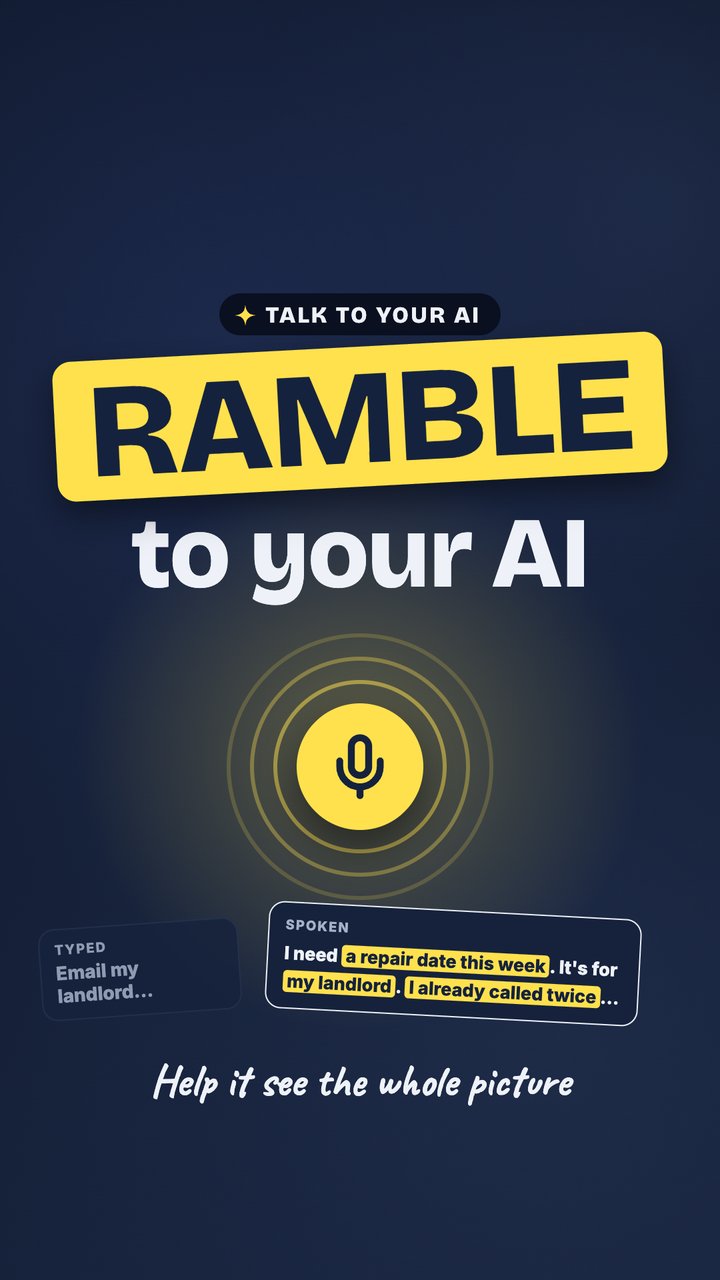
When we type a request, we often cut it short. Said out loud, the same request tends to carry what the AI would otherwise guess. A fictional email to a landlord shows the five details worth saying, when the keyboard still wins, and why you read it back before you send.
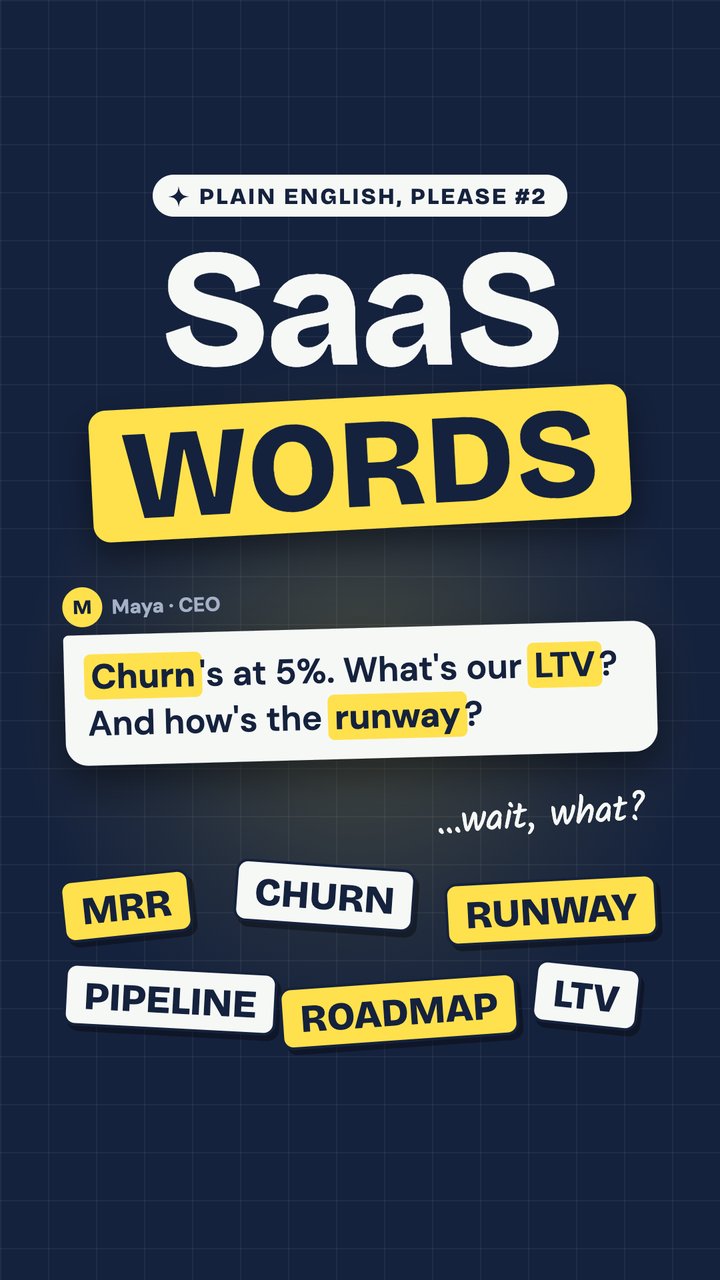
MRR and ARR, churn, runway, pipeline, roadmap and LTV. What each word counts, one fictional team's numbers worked through, and what each number doesn't tell you.
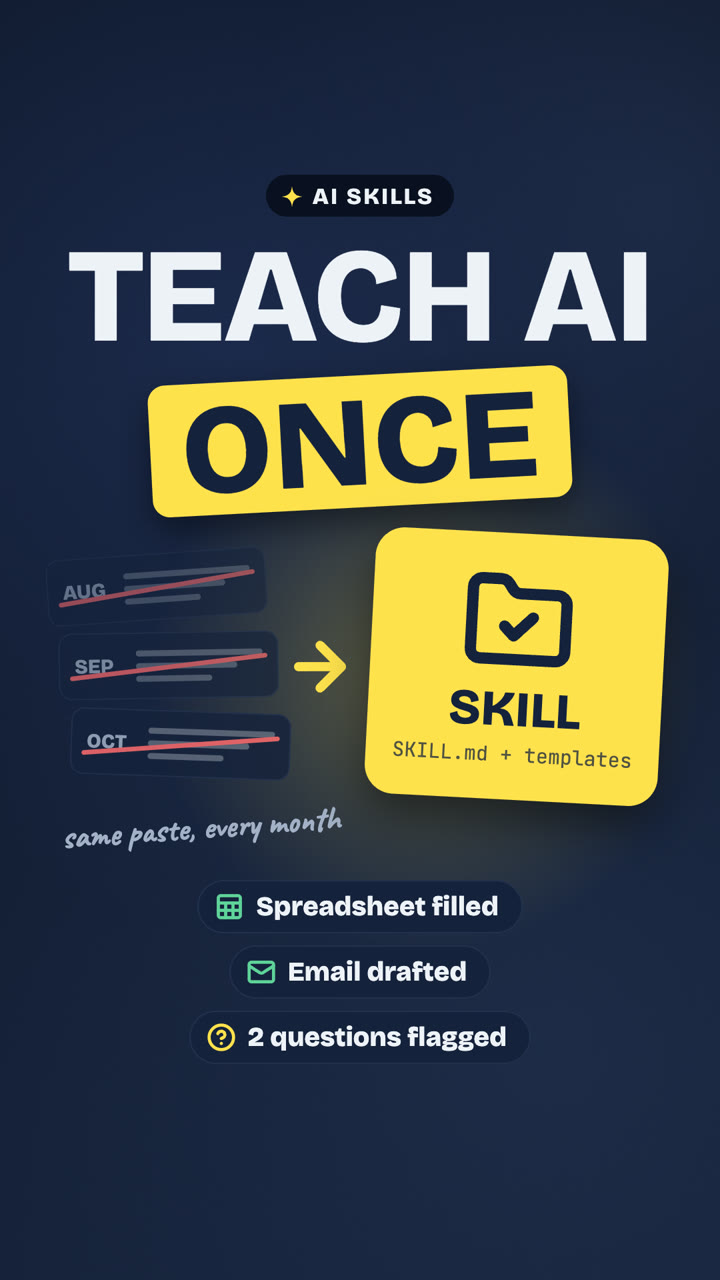
A skill saves the steps and templates for one repeated job. We tested one with a fictional freelancer's monthly pack for their accountant, and a person still checks the result.
See how Token Weather displays context use and how a custom panel can put your tasks beside the chat.
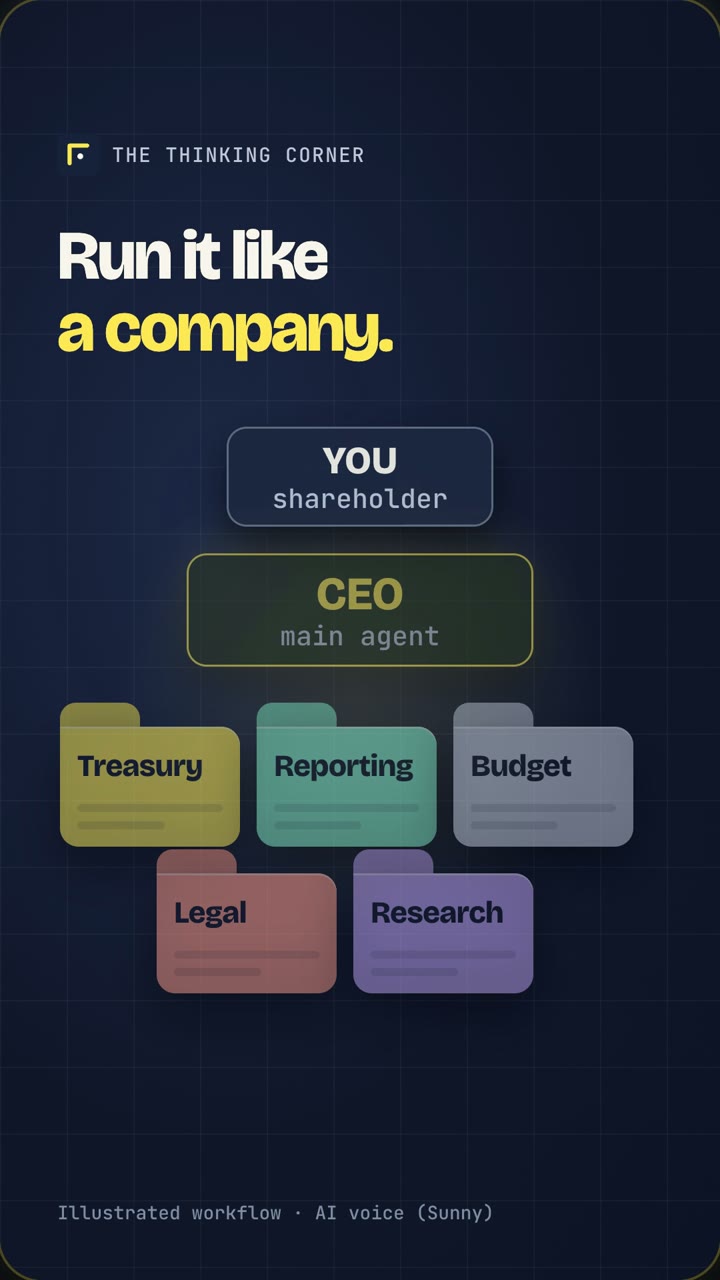
Give every agent a clear role, let a main agent coordinate the work, keep irreversible decisions with you, and bring in the whole team only when the task is worth the extra tokens.
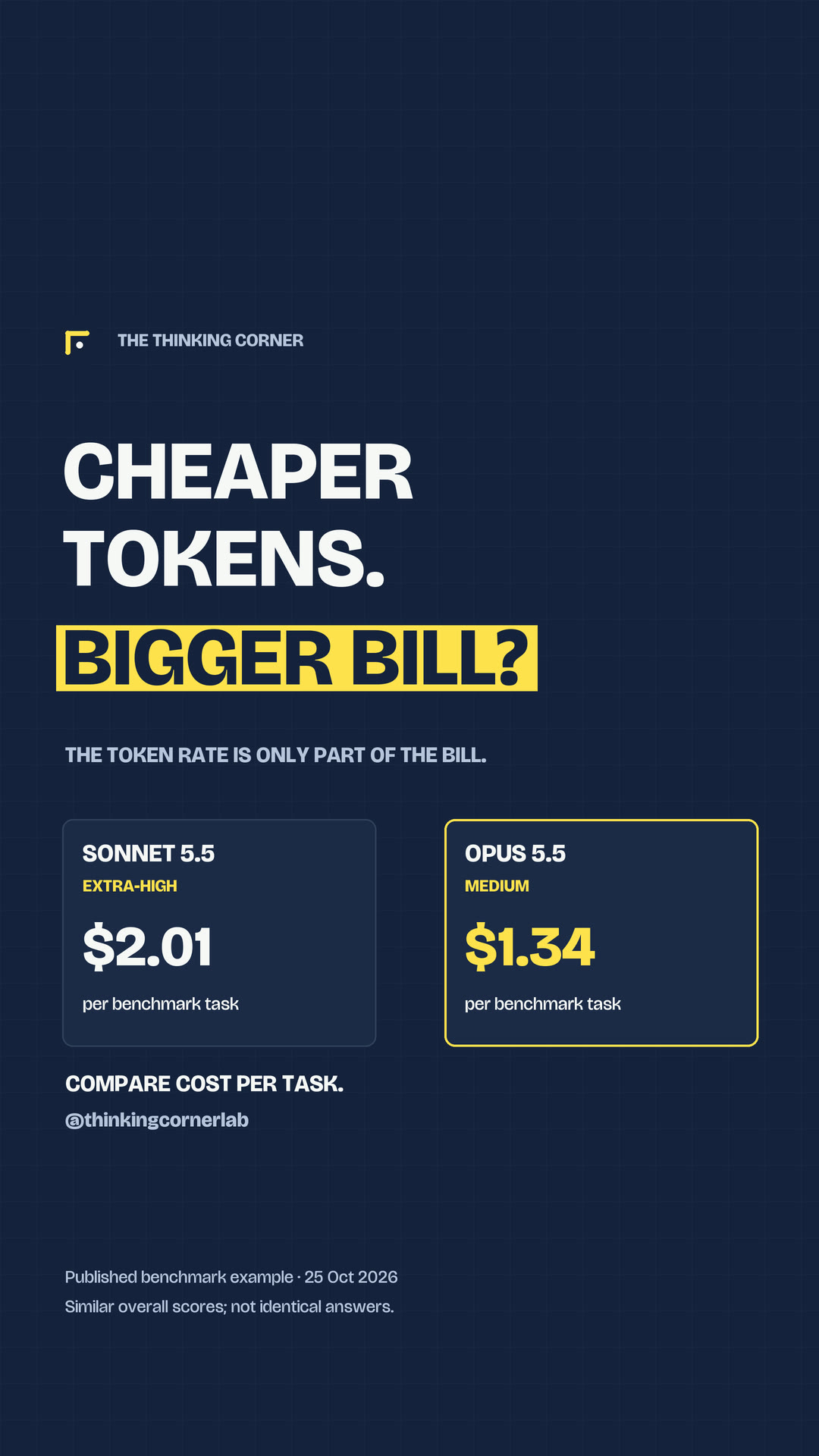
Choose a model that can do the job, tune its thinking effort, and compare the cost of the completed task. A lower token price is only part of the bill.
Keep the rules, the unfinished work and the reasons behind your decisions in your project folder. Then start a new AI chat with a clear place to pick up.
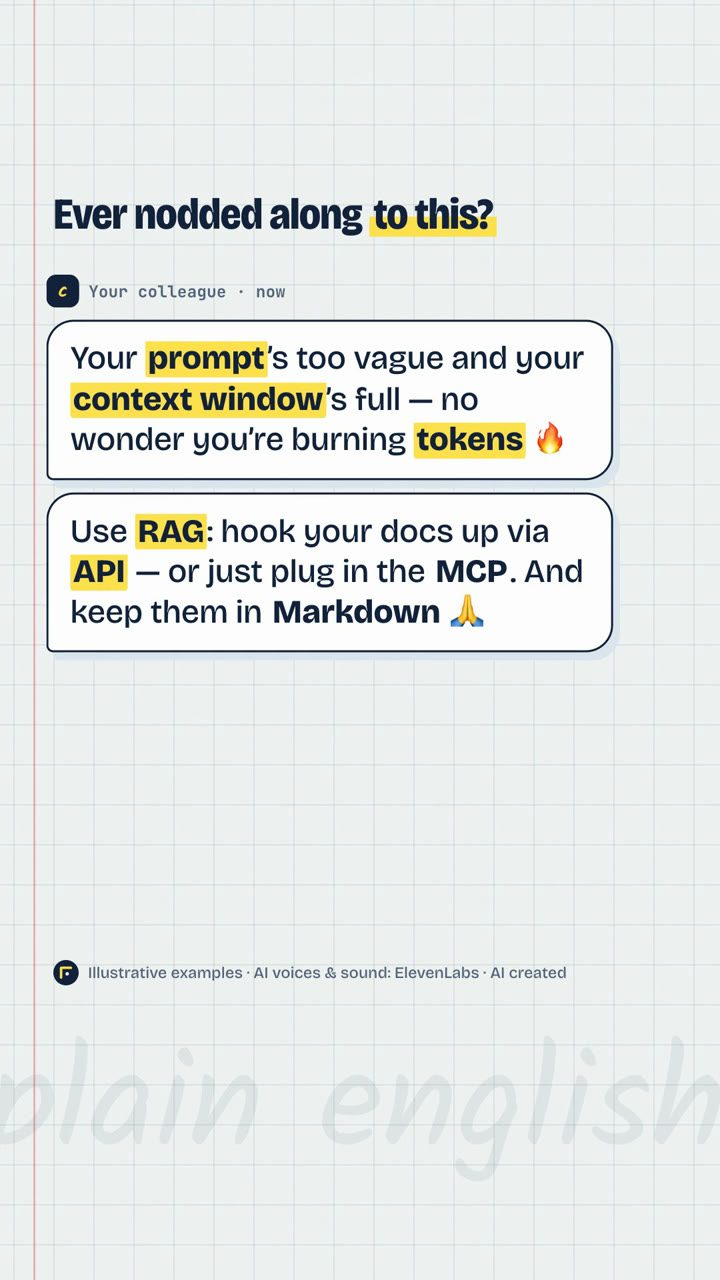
Prompt, context window, token, RAG, API, MCP and Markdown. Each one explained in a sentence, with an everyday picture and what it means when you use AI.
The code button in ChatGPT and Claude lets the AI work with a folder on your computer, and you don't write a single line. We ran the same request in both apps: same folder, same €1,026 quote, and both asked before sending.
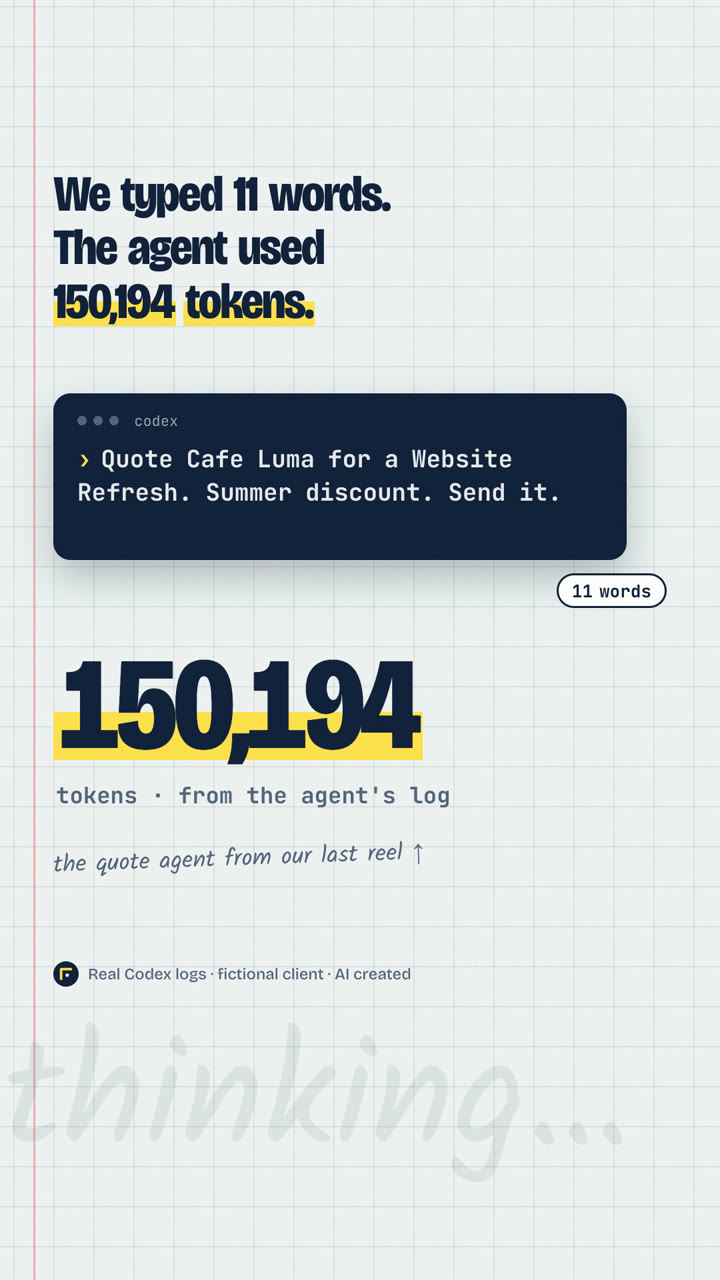
We typed 11 words and the agent used 150,194 tokens. About 99% went to re-reading, and the answer itself was the small part. Here is why, and the habits that keep it lean.
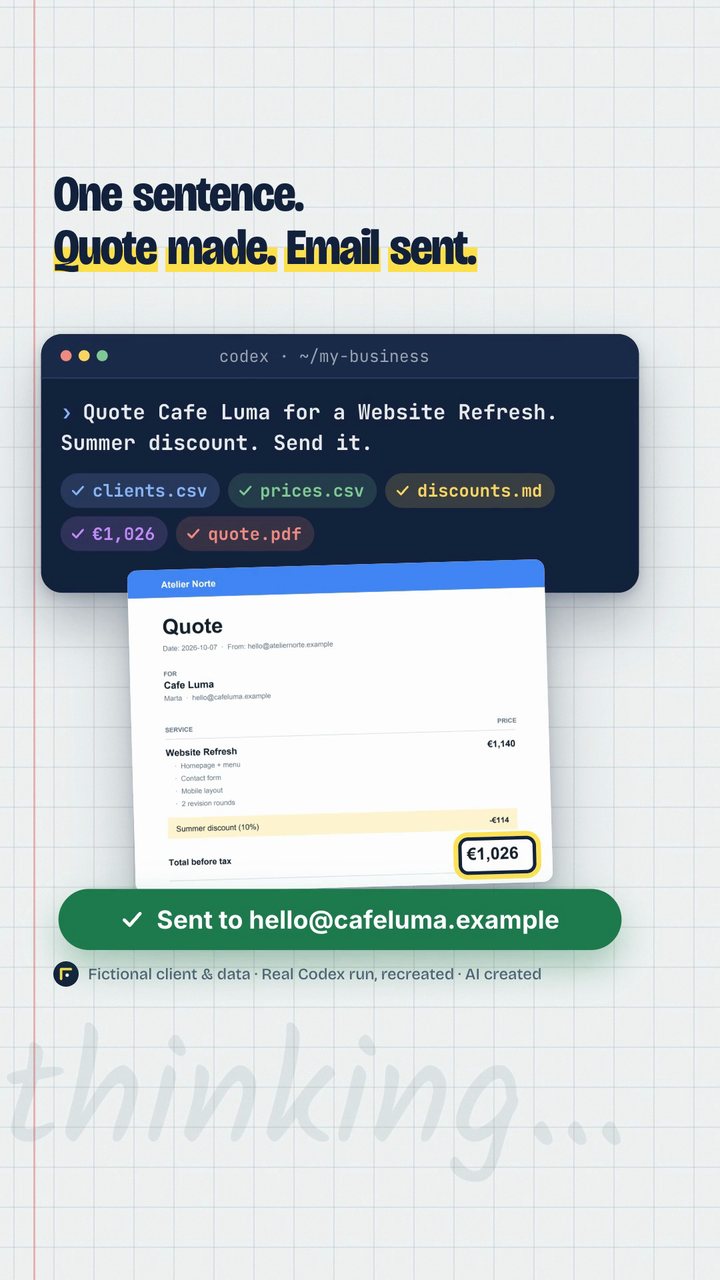
Eleven words, and the quote was made, checked and ready to send. The clever part wasn't the prompt. It was a folder with four files. Here is the whole setup, step by step.
First published on the old blog. Kept as they were, with their original dates, so some details may have changed.

OpenAI's browser puts ChatGPT next to the page you're reading. What it does, what changes in a normal day, and why browsers are turning into copilots.

When we speak instead of type, we give the AI more context without trying. Why that often helps, and when the keyboard is still the better tool.
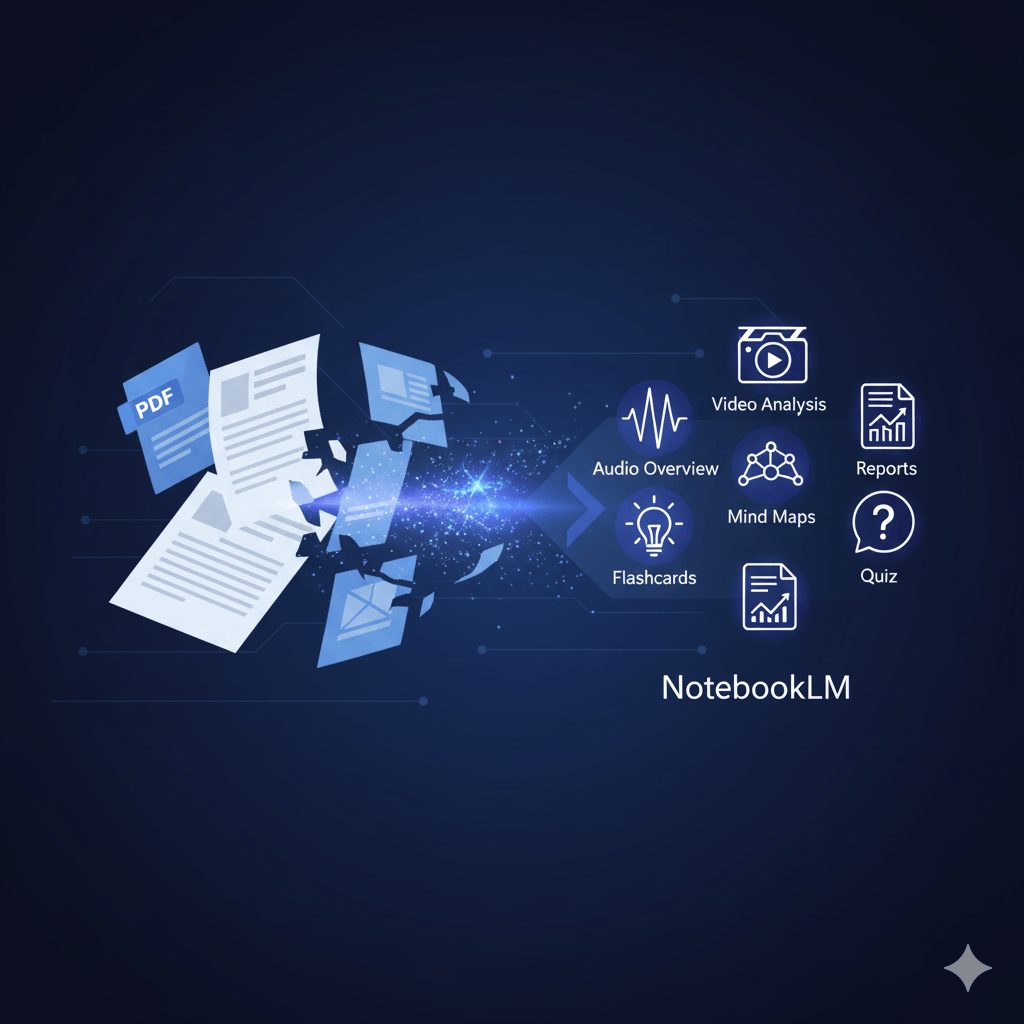
A Google tool that only works with the material you give it: notes, papers, transcripts. What it does, what changed in November 2025, and how to use it to learn.